If you want a Chicago neighborhood where daily life feels practical, connected, and full of local flavor, Albany Park deserves a closer look. Whether you are planning a move, comparing North Side neighborhoods, or thinking about long-term value, it helps to know how a place works on an ordinary Tuesday, not just on a weekend visit. From Brown Line access to riverfront parks and walkable food corridors, Albany Park offers a routine that can feel both convenient and grounded. Let’s dive in.
Albany Park at a glance
Albany Park began as a farming community, was annexed in 1889, and grew quickly after transit reached Kimball and Lawrence in the early 1900s. That history still shows up in the neighborhood’s layout today, where transit, housing, and commercial streets are closely tied together.
Today, Albany Park is widely recognized for its diversity and its strong mix of international food and market activity, especially along Lawrence Avenue and around Kedzie Avenue. According to CMAP’s 2024 community snapshot, the neighborhood has 45,538 residents and 17,435 households, giving it the feel of an established, active part of Chicago rather than a newly built pocket of the city.
Transit shapes daily life
For many residents, transit is not just a backup plan. It is part of the normal rhythm of getting to work, running errands, and meeting friends around the neighborhood or downtown.
CMAP reports that 19.1% of Albany Park commuters use transit, and 17.9% of households have no vehicle available. Those numbers help explain why rail and bus access matter here in a very real, day-to-day way.
Brown Line access in Albany Park
The Brown Line is the neighborhood’s main transit spine. CTA says Brown Line service runs daily between Kimball and downtown, with service roughly from 4:00 a.m. to 1:30 a.m. on weekdays and Saturdays, and 5:00 a.m. to 1:00 a.m. on Sundays and holidays.
Albany Park is served by the Francisco, Kedzie, and Kimball Brown Line stations. CTA lists all three as accessible, which is a meaningful part of everyday convenience if you are thinking about regular commuting, guests, or long-term livability.
Bus routes support short trips
Rail gets most of the attention, but buses help fill in the neighborhood map. CTA shows Kimball station connecting to bus routes #81, #82, and #93, and current active routes relevant to the area also include #78 Montrose.
CTA also states that all CTA buses are accessible. That makes quick cross-neighborhood trips, grocery runs, and station connections more manageable if you prefer not to drive for every errand.
Lawrence and Kedzie make errands easier
A big part of Albany Park’s appeal is how often daily tasks can happen in the same general area. Instead of driving from one isolated shopping center to another, you are more likely to find errands, meals, and quick stops clustered along familiar neighborhood corridors.
Lawrence Avenue and Kedzie Avenue are the clearest examples. WTTW describes Middle Eastern businesses near Kedzie and Lawrence, while Lawrence also features South and Central American restaurants and businesses.
Choose Chicago highlights the neighborhood’s restaurant mix across Mexican, South American, Filipino, Korean, Indian, Cambodian, Somali, Romanian, and Middle Eastern cuisines. For everyday living, that means your options are broad, local, and woven into the neighborhood fabric.
What everyday shopping looks like
Albany Park is best understood through its smaller-scale, street-level businesses. The most accurate way to picture routine shopping here is through international markets, specialty groceries, neighborhood cafes, and family-owned restaurants rather than big-box retail.
That can make ordinary routines feel more connected. You might pick up groceries, grab coffee, and choose dinner within a few blocks, all without turning a simple errand into a long trip across town.
A food scene that supports community life
Albany Park’s food identity is not just a visitor draw. It is also a sign of how active and locally rooted the neighborhood feels.
Choose Chicago notes that Flavors of Albany Park is the city’s biggest single-day restaurant crawl, with more than 70 participating restaurants. While that event is special, it also reflects something practical about daily life here: food, social routines, and local business activity are concentrated in walkable places.
Parks add room to breathe
One reason Albany Park stands out is that urban convenience does not mean giving up access to green space. The neighborhood has several park anchors that can easily become part of your normal week.
If you value a morning walk, a place to stretch out on a weekend, or a nearby route along the river after work, Albany Park offers real options.
Horner Park anchors recreation
Horner Park is the neighborhood’s largest recreation anchor at 57.97 acres, according to the Chicago Park District. Amenities include softball fields, baseball diamonds, basketball courts, tennis and pickleball courts, a playground, picnic groves, an outdoor fitness course, and an oak savannah.
The adjacent Horner Park Natural Area adds about eleven acres of savanna, prairie, and riparian habitat. That mix gives you both active recreation space and quieter natural areas in one part of the neighborhood.
River Park and Ronan Park bring river access
River Park and Ronan Park help define Albany Park’s riverfront character. The Chicago Park District says River Park includes a river walk and boat-launch amenities, while River Park Natural Area contains more than six acres of native habitat at the confluence of the Chicago River and the North Shore Channel.
Ronan Park includes a wooded river-edge path and the Multicultural Sculpture Park & Healing Garden. Choose Chicago also notes that River Park includes wildlife habitat, fishing spots, a canoe launch, and an interactive water playground, while Ronan Park is known for bird watching and quieter river walks.
Housing feels established and low-rise
Albany Park’s housing stock gives the neighborhood a distinct feel on the ground. CMAP reports a median year built of 1931, and 60.8% of the housing inventory was built before 1940.
That age profile points to an older, established housing base rather than a neighborhood defined by new construction. It also helps explain why the streetscape often feels layered and varied instead of uniform.
What you are likely to see
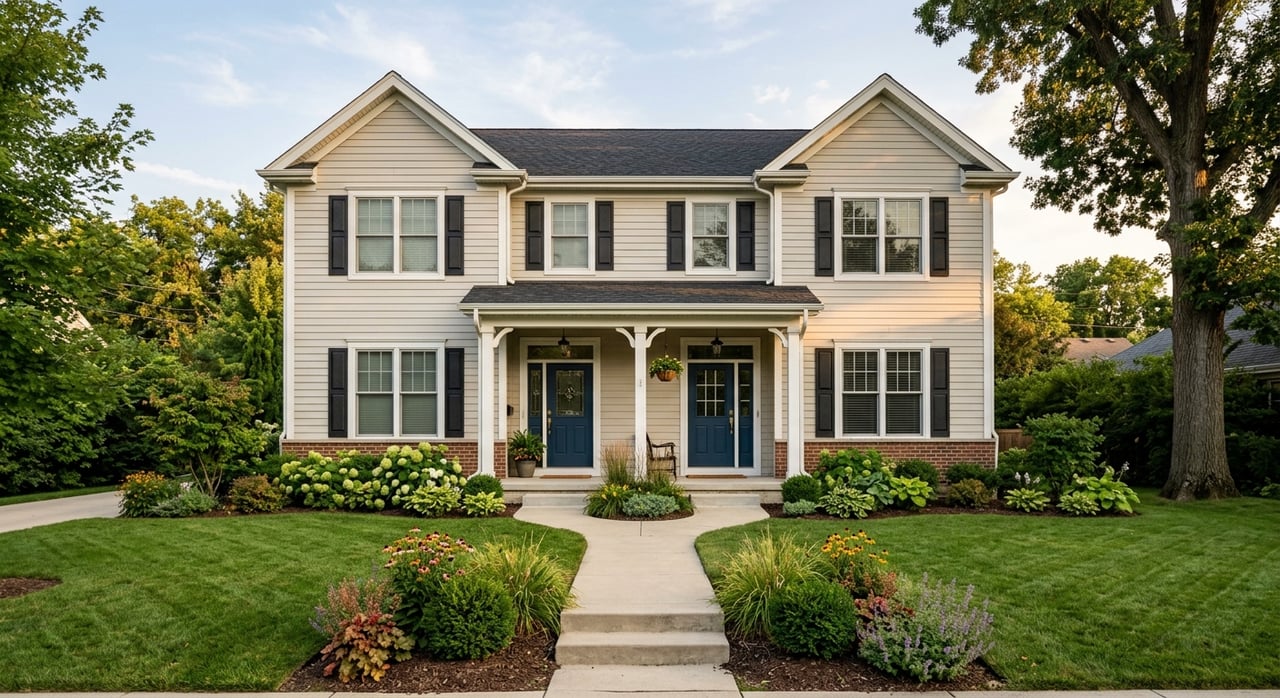
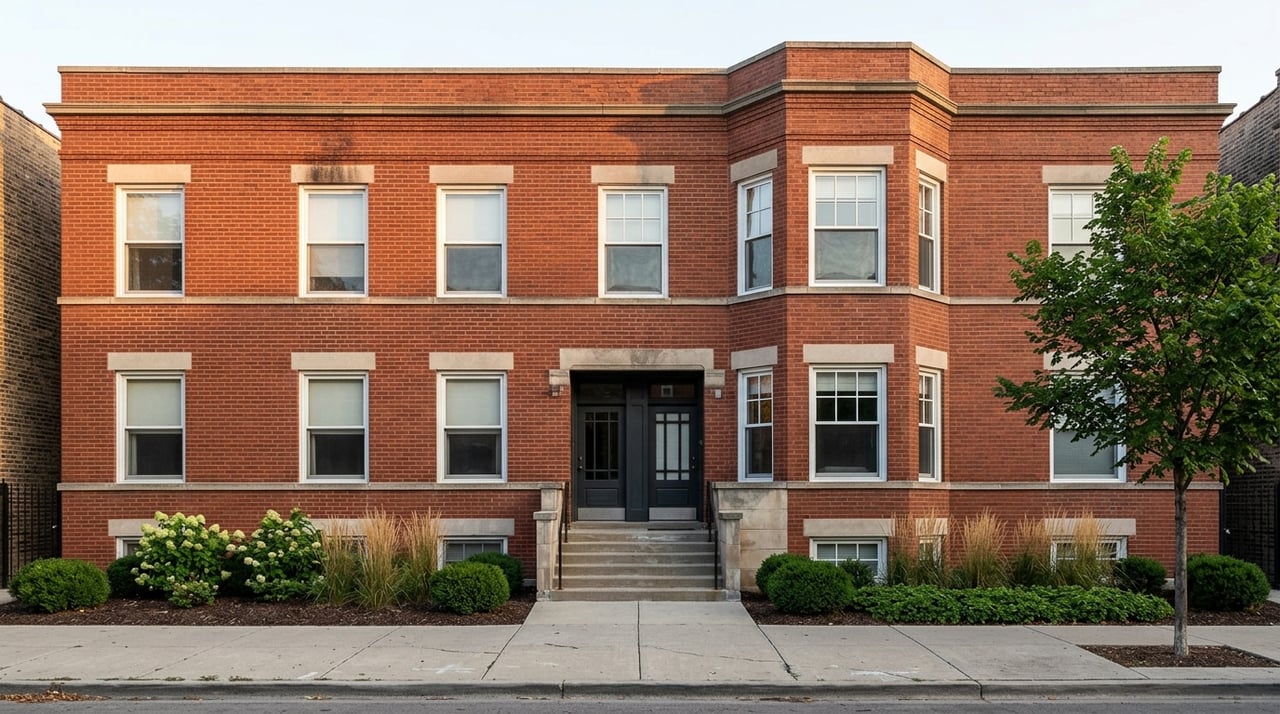
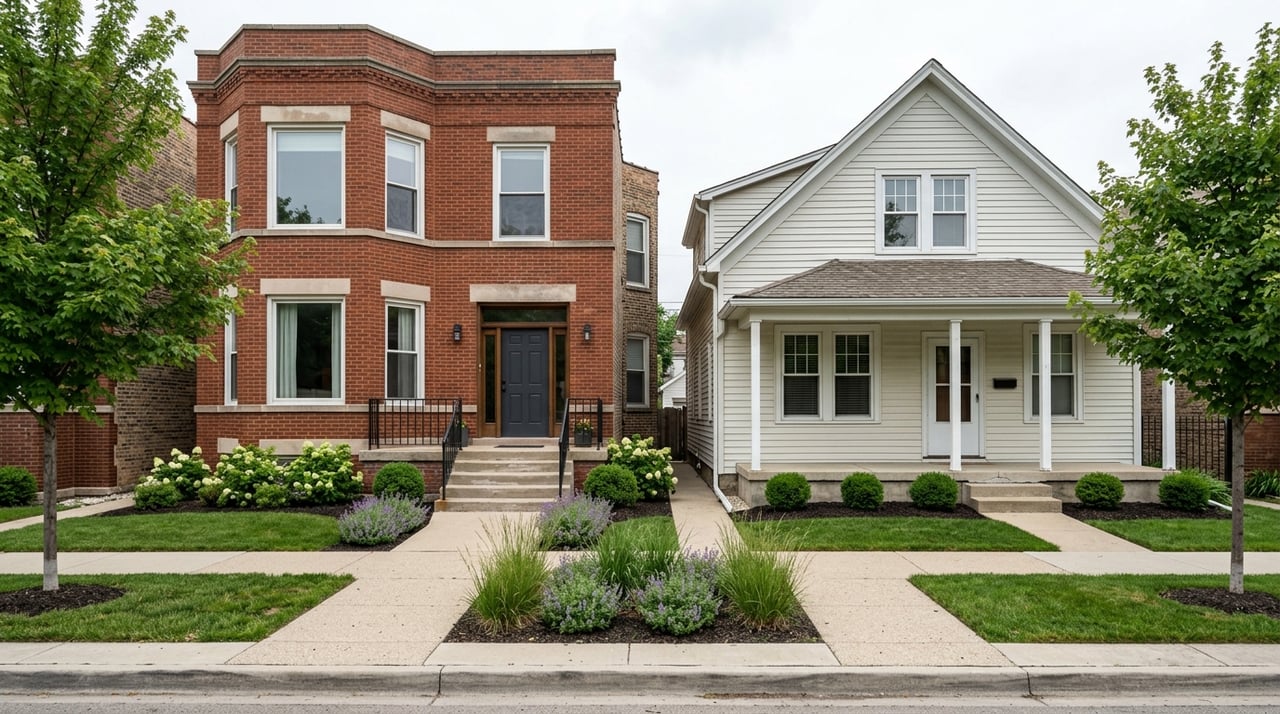
Based on the housing-age data and common Chicago building types, Albany Park generally reads as a dense, low-rise neighborhood. The Chicago Architecture Center describes two- and three-flats as a major part of the city’s housing, while bungalows are typically brick, one-and-a-half stories with low-pitched hipped roofs and front porches.
Courtyard buildings, often built between the 1890s and the Great Depression, add another common form. In practical terms, that means Albany Park often feels made up of flats, bungalows, and courtyard apartments rather than high-rise towers.
Renters and owners both shape the market
CMAP reports that 56.3% of Albany Park housing is renter occupied. At the same time, the neighborhood still has a meaningful owner-occupied base, which supports a housing mix that feels varied.
For buyers, that can mean a broader range of property types and price points to explore. For sellers, it is a reminder that Albany Park appeals to more than one kind of household, especially people who value transit, established housing, and neighborhood amenities.
What everyday living can feel like
The easiest way to understand Albany Park is to picture a normal day. You might walk to the Brown Line, stop for groceries or coffee along Lawrence, and head to a park or river path later in the evening.
That rhythm is a big part of the neighborhood’s appeal. Transit access, local businesses, and outdoor space are not scattered at random. They work together in a way that makes ordinary life easier to navigate.
Why Albany Park stands out for buyers
If you are comparing Chicago neighborhoods, Albany Park offers a combination that is hard to ignore. You get established housing stock, strong transit access, commercial corridors that support real daily needs, and several notable park spaces.
It can be especially appealing if you want a neighborhood where you can build routines close to home. For first-time buyers, move-up buyers, and people who prioritize practical city living, Albany Park has a lot to offer beyond first impressions.
If you want help exploring Albany Park homes, comparing property types, or planning your next move in Chicago, The Jerry Cox Group is here to guide you with local insight and service-first support.
FAQs
How is transit in Albany Park, Chicago?
- Albany Park is served by the Brown Line at Francisco, Kedzie, and Kimball, along with bus routes including #81, #82, #78, and #93, making transit a regular part of daily life for many residents.
What are the main shopping streets in Albany Park?
- Lawrence Avenue and Kedzie Avenue are the neighborhood’s main everyday commercial corridors, with international markets, specialty groceries, cafes, and family-owned restaurants.
What parks are in Albany Park, Chicago?
- Key parks include Horner Park, River Park, and Ronan Park, offering recreation areas, river access, walking paths, natural habitat, and outdoor amenities.
What is the housing like in Albany Park?
- Albany Park has an older housing stock with a median build year of 1931, and it is generally known for low-rise housing such as flats, bungalows, and courtyard apartment buildings.
Is Albany Park a good fit for buyers who want everyday convenience?
- Albany Park can be a strong fit if you value transit access, walkable errands, established housing, and nearby parks as part of your daily routine.