If your workday starts at home but rarely stays there, West Loop can feel like it was built for your routine. Remote and hybrid work give you flexibility, but they also make your neighborhood choice more important because you need easy transitions between work, errands, meals, meetings, and downtime. In West Loop, that mix comes together in a way that feels practical and energizing. Let’s dive in.
West Loop fits modern workdays
One reason remote workers are drawn to West Loop is simple: you can keep most of your day within a short radius. The Fulton Market District describes the area as a place where food, design, commerce, arts, and culture intersect, and that mix shows up in daily life. You are not choosing between a business district and a neighborhood feel because West Loop blends both.
That matters when you work from home part or all of the week. You can take a morning meeting at home, step out for coffee, run an errand, and meet a friend for dinner without spending half the day in transit. For many buyers, that kind of convenience is just as important as square footage.
West Loop also has deeper neighborhood roots than many people expect. The West Loop Community Organization has served the area for more than thirty years, which points to an established local network and a more mature residential feel. If you want an active area that still functions as a real neighborhood, West Loop checks that box.
Walkability makes daily life easier
For remote workers, commute time is not the only thing that matters. What really matters is how much friction your day has. West Fulton Market has a Walk Score of 94, a Transit Score of 84, and a Bike Score of 91, which helps explain why so many residents can move around easily without depending on a car.
That kind of access changes your daily rhythm. Instead of planning every stop, you can build your day more naturally around what you need. A quick lunch break, a pharmacy run, a fitness class, or an afternoon coffee becomes easier when so much is close by.
Transit supports hybrid schedules
Even if you work remotely most days, transit still matters when you need to get across the city. Walk Score notes that the Morgan Green/Pink Line station is about a six-minute walk away, and CTA lists Morgan at 958 W Lake St. That gives hybrid workers a straightforward connection into the Loop and other parts of Chicago.
Clinton adds another useful option. CTA says the Clinton Green/Pink station at 540 W. Lake St. connects to bus #56 and to Metra’s Ogilvie Transportation Center on the Union Pacific North, Northwest, and West lines. If your work or personal life takes you downtown or out to the suburbs, that extra layer of connectivity can make a big difference.
Coworking spaces add flexibility
Working from home sounds great until you need a change of scene. That is one of West Loop’s biggest strengths. The neighborhood gives you more than one way to structure your workday.
WeWork describes West Loop as a dynamic area with creative studios and startups, and says its spaces are geared toward remote workers, solopreneurs, and small teams. The Yard’s Fulton Market location adds features like a podcast studio, wellness programming, rooftop access, and shared or private offices near Ogilvie. Together, those options give you a practical office-away-from-home when home starts to feel too quiet, too distracting, or too repetitive.
For buyers, that flexibility can be a real quality-of-life advantage. You may not need a huge dedicated office at home if the neighborhood itself offers good backup options. That can broaden the range of homes that fit your lifestyle.
Coffee shops work as third spaces
Remote work often runs better when you can rotate settings. West Loop makes that easier with local café options that fit everything from focused solo work to casual meetings. A nearby coffee shop can help break up the day without pulling you far from home.
Morgan Street Cafe says it operates locally owned cafes in the heart of West Loop and serves handcrafted coffee along with breakfast and lunch. Cupitol’s West Loop location is an all-day lounge with coffee and an in-house bakery. If you like the freedom to answer emails, take calls, or work between appointments, those kinds of nearby third spaces add real value.
West Loop homes suit remote work
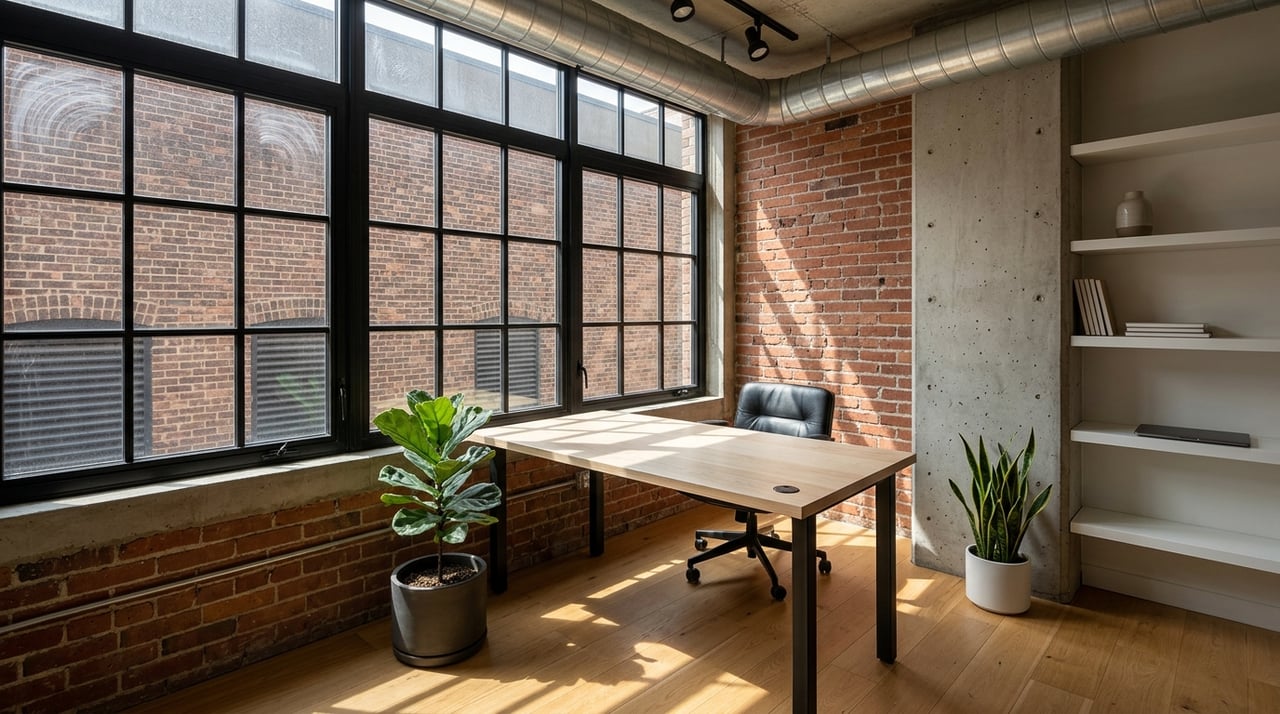
The neighborhood’s housing stock is another major reason remote workers pay attention to West Loop. Many homes in the area trace back to industrial buildings, and those features often translate well to home office life. Preservation Chicago notes that West Loop industrial lofts often include brick facades, expansive windows, tall ceilings that can range from 10 to 14 feet, and wide open floor plans.
For you, that can mean brighter work areas, more flexible furniture layouts, and a home that does not feel cramped by a desk setup. Older industrial buildings were able to convert successfully into condos and apartments in part because those layouts adapted well to modern living. That same adaptability helps remote workers today.
Loft character and newer options
West Loop is not a one-style neighborhood. You will find a mix of true lofts, soft-loft style homes, and newer high-rise floor plans, which gives buyers more ways to match space with routine. If you work from home, that variety matters because your ideal setup may look very different from someone else’s.
Some properties lean into loft character and flexible interior volume. The Station Lofts describes open-concept layouts, high ceilings, natural light, common-area WiFi, and a dedicated work space. Circa 922 combines a restored Printers Loft with open floor plans, floor-to-ceiling windows, 12-foot ceilings, exposed brick, and modern finishes.
Newer buildings add another layer of convenience. Sage West Loop markets boutique high-rise apartments in studio, one-, and two-bedroom layouts designed for modern living. In practical terms, buyers can often look for options that support a desk nook, den, or second bedroom depending on budget and priorities.
Why variety matters for buyers
Remote workers do not all need the same thing from a home. Some want a dramatic loft with room for a large desk and creative setup. Others want a newer building with modern finishes, simpler upkeep, and amenities that support a busy schedule.
That is part of West Loop’s appeal. You can focus your search on how you actually live and work, not just on a standard checklist. A neighborhood with multiple housing styles, strong transit, and easy daily convenience gives you more room to make smart tradeoffs.
West Loop supports life beyond work
A neighborhood that works for remote life should do more than support productivity. It should also make it easier to step away from your laptop and enjoy where you live. In West Loop and Fulton Market, restaurants, nightlife, and culture are woven into the area’s identity, including in repurposed warehouse spaces noted by Choose Chicago.
That gives the neighborhood energy throughout the day and into the evening. For many buyers, the appeal is not just that West Loop helps you work efficiently. It is that the neighborhood helps you feel like your time off is close at hand too.
What remote workers often value most
When you pull all of this together, the pattern is clear. West Loop gives remote and hybrid workers convenience, flexibility, and variety in one neighborhood. You get strong walkability, solid transit access, coworking choices, café work spots, and home layouts that can adapt to different routines.
If you are thinking about buying in Chicago and want a neighborhood that supports the way you live now, West Loop deserves a close look. The right home is not just about where you sleep. It is also about how smoothly your whole week works.
If you want help exploring West Loop homes that fit your work-from-home routine, neighborhood goals, and long-term plans, The Jerry Cox Group is here to guide you with local insight and a service-first approach.
FAQs
Why do remote workers like living in West Loop?
- Remote workers often like West Loop because it combines high walkability, strong transit access, coworking spaces, coffee shops, and housing options that can support a home office routine.
Is West Loop walkable for everyday errands and dining?
- Yes. West Fulton Market has a Walk Score of 94, which reflects strong walkability for daily needs and neighborhood activities.
Does West Loop have good transit for hybrid workers?
- Yes. The area is served by the Morgan and Clinton Green/Pink Line stations, and Clinton also connects to bus service and Metra at Ogilvie Transportation Center.
Are there coworking spaces in West Loop?
- Yes. Research for this article identified coworking options in West Loop including spaces from WeWork and The Yard in Fulton Market.
What types of homes in West Loop work well for remote jobs?
- Many buyers look at lofts, soft lofts, and newer high-rise homes in West Loop because open layouts, tall ceilings, natural light, and flexible room configurations can work well for home office setups.