Ever walked a Chicago block and felt like the buildings were telling you the city’s whole story? In Hyde Park and Bronzeville, they almost do. If you want a self-guided route that blends striking design, local history, and a better feel for how these South Side neighborhoods evolved, this walk gives you a clear place to start. Let’s dive in.
Why Hyde Park and Bronzeville Fit Together
Hyde Park and Bronzeville make the most sense when you see them as one connected architecture story. Hyde Park began as a railroad suburb in 1853, was annexed in 1889, and changed quickly after the University of Chicago was founded in 1890 and after the 1893 World’s Fair. Bronzeville developed its own powerful identity later as the Black Metropolis during the Great Migration.
That shared South Side history shows up in the buildings. In Hyde Park and Kenwood, you can trace the shift from large suburban homes to campus landmarks, apartment buildings, and apartment hotels. In Bronzeville, architecture reflects Black enterprise, civic life, religion, culture, and self-determination as much as it reflects style.
How to Do This Self-Guided Walk
The easiest way to experience this route is as two loops. Start in Hyde Park and Kenwood for Gothic campus buildings, Prairie School design, and housing evolution. Then continue into Bronzeville for churches, institutions, and business landmarks tied to the neighborhood’s role as a major center of Black life in Chicago.
This works best as an exterior, sidewalk-based walk. You can do the full route in one day if you like to move steadily, or split it into two separate outings. If you want one interior add-on, Robie House offers official tours Thursday through Monday from 9 a.m. to 4 p.m.
Hyde Park Loop Highlights
Start at the Main Quadrangle
The University of Chicago campus gives Hyde Park one of its clearest visual identities. The Main Quadrangle dates to 1892, and with Cobb Gate and Cobb Lecture Hall, it established the campus’s Neo-Gothic look early on.
Cobb Lecture Hall was the first University of Chicago building completed when classes began in 1892. Cobb Gate followed in 1897 and became one of the campus’s most recognizable entry points. Together, these buildings show how the university used a collegiate Gothic plan to create a strong sense of place.
See Campus Gothic at Full Scale
From the quadrangle, make time for Rockefeller Memorial Chapel. Completed in 1928 and designed by Bertram Grosvenor Goodhue, it represents the campus’s more monumental Gothic phase.
This stop rewards slow looking. The chapel includes a 72-bell carillon and more than 100 stone sculptures, which makes it one of Hyde Park’s richest examples of detail and craftsmanship.
Add International House
International House, completed in 1932 by Holabird & Root, adds another layer to the campus story. It is a nine-story Gothic building, but it also blends medieval references with Art Deco and Colonial Revival influences.
That mix matters because Hyde Park architecture is not frozen in one era. Even within a historic-looking campus, you can see how designers adapted older forms for modern residential and institutional uses.
Stop at Robie House
No architecture walk in Hyde Park is complete without Robie House. Completed in 1910, it is widely described by the University of Chicago as the best example of the Prairie style and is also a National Historic Landmark.
If the campus buildings feel vertical, enclosed, and stone-heavy, Robie House feels like their opposite. Frank Lloyd Wright’s low horizontal lines, broad overhangs, and emphasis on long planes create a completely different idea of domestic architecture. Seeing that contrast in person helps explain why Hyde Park is such a strong place to study Chicago design.
Kenwood and Housing Evolution
Visit McGill House
Head north into Kenwood to see how the South Side once expressed suburban wealth through architecture. The McGill House, a 1891 mansion by Henry Ives Cobb, is an important Chateauesque example and helps connect the campus story to the mansion district story.
It also reminds you that the same architects sometimes shaped multiple parts of the neighborhood. Cobb was involved in early University of Chicago buildings too, so this stop creates a useful link between institutional and residential design.
Read the Kenwood Streetscape
The Kenwood District was once called the Lake Forest of the South Side. Even today, it still reads as a lower-density enclave of large houses on spacious lots.
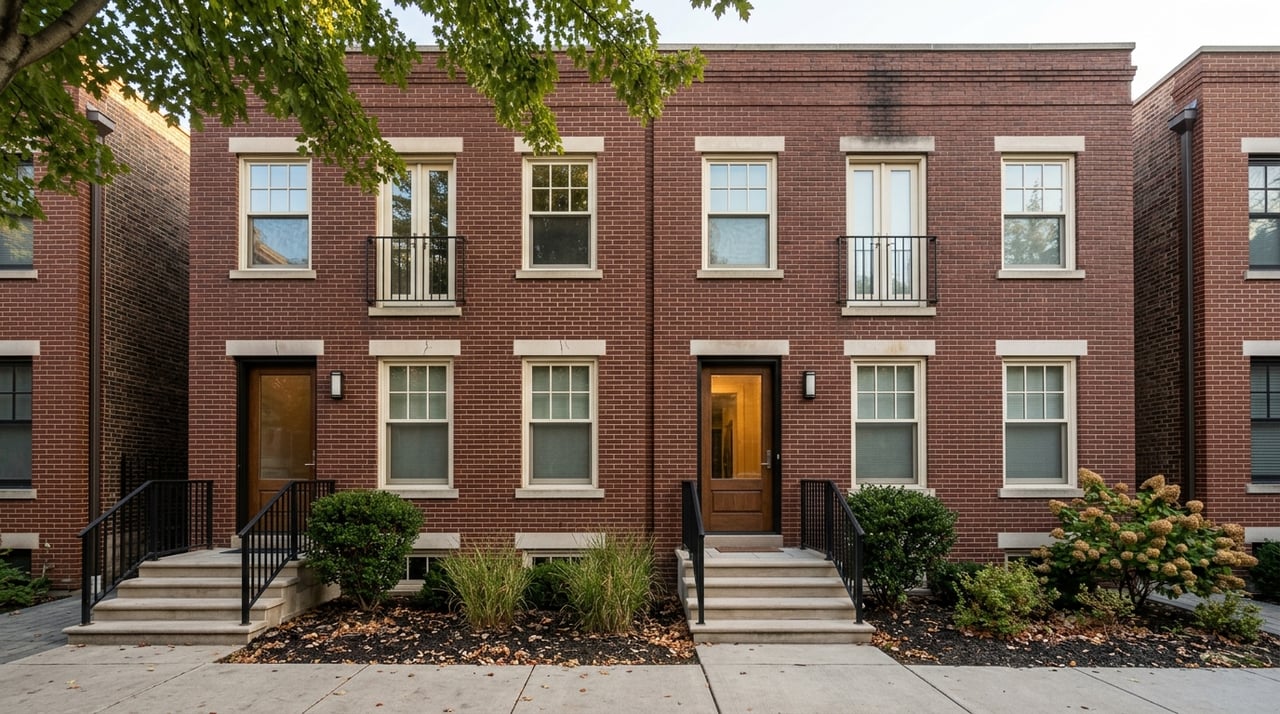
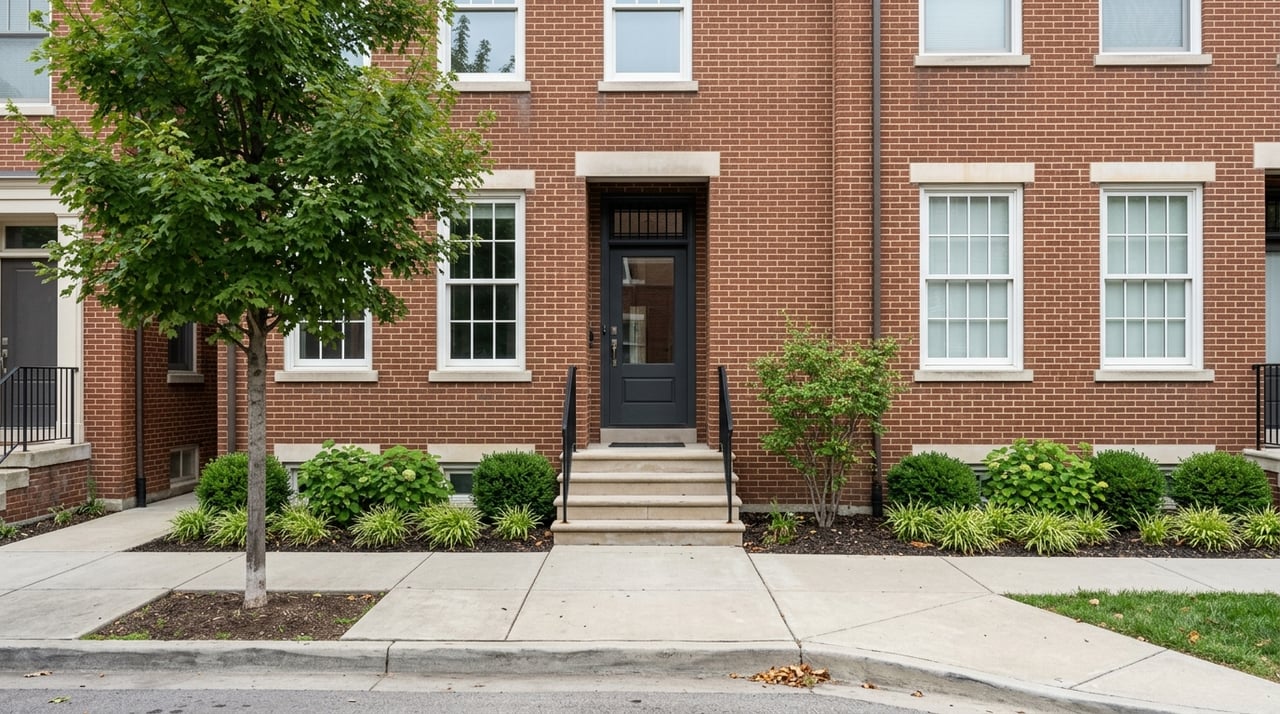
Nearby North Kenwood tells a slightly different story. There, masonry rowhouses from 1890 to 1905 and older pre-annexation structures show how large homes and denser urban housing developed side by side rather than in a simple, one-way sequence.
Notice the Shift to Apartments
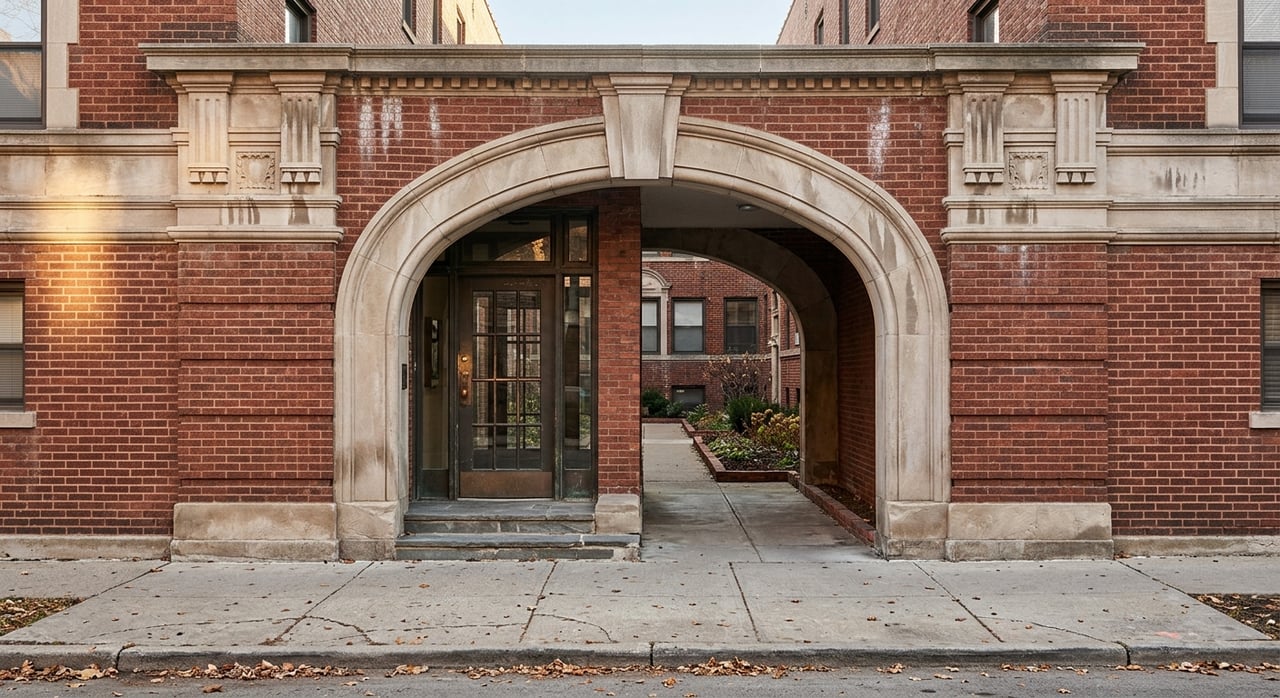
As you continue through Hyde Park, the housing story becomes more urban. South Side architecture sources note that large apartment buildings began appearing in the 1890s, often using deep courtyards and bay windows to bring in light and open space.
That design shift helps explain the neighborhood you see today. Hyde Park did not move from mansions to towers overnight. It evolved through apartment buildings, apartment hotels, and later townhouse-focused renewal projects that added density while still responding to the street.
Add Shoreland Hotel and the Bank Building
The Shoreland Hotel is a helpful stop for understanding apartment hotels. Completed in 1925 and 1926, it reflects how changing tastes, rising land values, and rapid growth made this housing type more appealing in the early 20th century.
The Hyde Park-Kenwood National Bank adds a commercial note to the walk. Completed in 1929, it was the largest bank building outside the Loop at the time, and its Classical Revival form with Art Deco influences signals the neighborhood’s confidence in that period.
End With a Modern Coda
If you want to round out the Hyde Park story, the Hyde Park A & B urban renewal area offers a useful final chapter. Rather than wiping everything away, the project combined selective demolition with rehabilitation and retention.
It also reintroduced townhouse living to Chicago after nearly fifty years. With courtyards, brick, limestone, and a lower-density form, it shows a very different approach to neighborhood change than the blank-slate renewal seen in many other places.
Bronzeville Loop Highlights
Start With the Black Metropolis Frame
Bronzeville is not just a collection of beautiful buildings. It is part of the larger story of the Black Metropolis, a district the city describes as a city-within-a-city that grew as a center of Black business, culture, and community life.
The current landmark district preserves nine remaining structures from 1889 to 1936. Those survivors matter because they represent a much larger historic landscape that once anchored one of the most important Black urban centers in the country.
Visit South Side Community Art Center
The South Side Community Art Center is one of Bronzeville’s essential stops. Located in a former Georgian Revival mansion at 3831 S. Michigan Ave., it was remodeled in 1940 for the WPA art program.
The city notes that its interior is a rare New Bauhaus example and that it is the only continuous survivor of more than 100 WPA art centers nationwide. That gives this building architectural value, but also major cultural significance.
Stop at the Wabash Avenue YMCA
The Wabash Avenue YMCA, built from 1911 to 1913, helps connect architecture to migration and support systems. It provided housing and job training for newcomers during the Great Migration.
It also hosted the 1915 founding of the Association for the Study of Negro Life and History. On a self-guided walk, this is one of the clearest places to understand that Bronzeville’s institutions were central to daily life, not just background scenery.
See First Church of Deliverance
First Church of Deliverance adds a different visual note to the route. Completed in 1939 with towers added in 1946, this Art Moderne church was designed by Walter T. Bailey, Chicago’s first African-American architect.
This stop is worth seeing for style alone, but its larger story matters too. The building is tied to the history of Christian radio broadcasting and gospel music, which makes it an especially strong example of architecture linked to cultural influence.
Follow the Business Landmarks
To understand Bronzeville as a center of Black enterprise, focus on the Chicago Bee Building, Overton Hygienic Building, and Supreme Life Building. These stops show how business, publishing, banking, insurance, and housing overlapped in the neighborhood.
The Bee Building originally included upper-floor apartments and later housed the Douglass National Bank and Overton Hygienic. The Overton building housed the first nationally chartered African-American-owned bank, while the Supreme Life Building served as the longtime headquarters of the first African-American-owned and operated insurance company in the northern United States.
Add Quinn Chapel and Richard Wright House
Quinn Chapel brings a strong late-19th-century presence to the route. It is Chicago’s oldest African-American congregation and adds important religious and civic context to the Bronzeville walk.
The Richard Wright House at 4831 S. Vincennes shows another side of architectural significance. Not every important building stands out because of size or ornament. Sometimes a more ordinary residential structure becomes nationally meaningful because of the life and work connected to it.
What This Walk Reveals About Housing Today
One of the most useful things about this self-guided walk is how clearly it explains neighborhood change. In Hyde Park and Kenwood, you can see the progression from large-lot villas to rowhouses, apartment buildings, apartment hotels, and townhouses. In Bronzeville, you can see how homes, churches, social institutions, and commercial buildings all worked together to shape community life.
That broader view can be helpful if you are thinking about buying in the area. The architecture helps explain why the housing stock varies so much from block to block, and why preservation continues to matter. In Chicago, landmark designation provides legal protection and permit review, which is one reason many notable buildings still stand and have been adapted over time.
Planning Tips for Your Walk
Keep the route flexible
You do not need to see every stop in one trip. Hyde Park and Kenwood make a strong half-day outing on their own, and Bronzeville can easily fill another.
Focus on exteriors first
This route works well from the sidewalk. Plaques, facades, setbacks, materials, and rooflines do most of the storytelling.
Look for contrasts
The strongest moments on this walk come from comparison. Gothic campus buildings, Prairie School homes, large mansions, rowhouses, apartment hotels, and Art Moderne churches all appear within a relatively small part of the South Side.
Pay attention to preservation
Many of these sites remain visible today because of landmark recognition and preservation efforts. That makes the walk not just historic, but also a lesson in how Chicago manages change.
If you are exploring Hyde Park or Bronzeville because you are thinking about a move, it helps to have a local guide who understands both the architecture and the housing landscape behind it. The team at The Jerry Cox Group brings neighborhood knowledge, clear guidance, and a service-first approach to every step.
FAQs
What makes a Hyde Park architecture walk unique?
- A Hyde Park architecture walk lets you see Gothic university buildings, Prairie School design, mansion-era homes, apartment buildings, and apartment hotels in one connected neighborhood story.
What are the top Bronzeville architecture stops to see?
- Key Bronzeville stops include the South Side Community Art Center, Wabash Avenue YMCA, First Church of Deliverance, Chicago Bee Building, Supreme Life Building, Quinn Chapel, and the Richard Wright House.
Can you do a self-guided architecture walk in Hyde Park and Bronzeville in one day?
- Yes, you can do both loops in one day, but many people may prefer splitting Hyde Park-Kenwood and Bronzeville into two separate outings for a more relaxed pace.
Why is Robie House important on a Hyde Park walk?
- Robie House is important because it was completed in 1910 and is widely described by the University of Chicago as the best example of the Prairie style.
How does this walk help homebuyers understand Hyde Park and Bronzeville?
- This walk shows how the neighborhoods developed over time, which helps you better understand the variety of housing types, streetscapes, and preservation patterns you may see while home shopping.